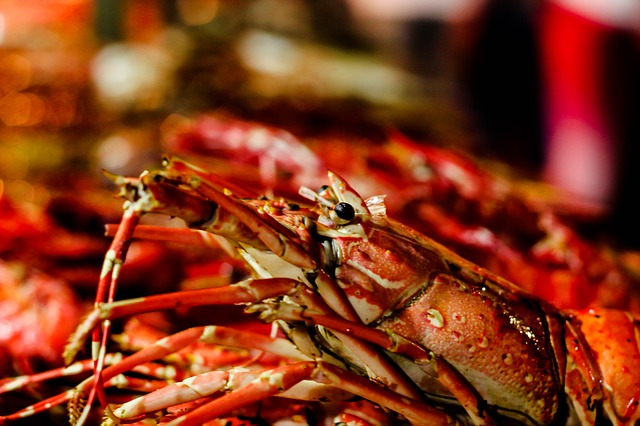
Although physicians have better technologies today to uproot cancer from the human body, receiving a diagnosis of cancer is still a very stressful ordeal, even when it is cured in the end or even when the tumor is not proved to be malignant in the first place!
Lifestyle is important in preventing cancer, but at the end of the day, there is only so much you can do. I mean, humans still have a 33% chance of developing cancer during their lifespan just because they are …humans.
But that’s not the case in all animal species. Unfortunately, when it comes to oncology research, very few types of animals are studied to help us find treatments. Mice have an 80% rate of developing cancer if raised in a lab. They live about 2 years in the wild, so they don’t need to ‘worry’ about the possibility of developing cancer. But nature develops all sorts of evolutionary experiments and when it comes to cancer, here are 10 of them:
1 The naked mole rat is a rodent species where no individual was ever found of developing tumors. Even if tumors are discovered in the near future, its rarity is a mystery for a rodent the size of an average mouse. One mechanism supporting this increased cell contact inhibition of the average naked mole rat is their constituent hyaluronan, which has a molecular weight 5 times larger than ours. It sure helps that growth is expensive in their environment and they developed an uncanny ability to survive prolonged periods of starvation and intermittent oxygen restriction.
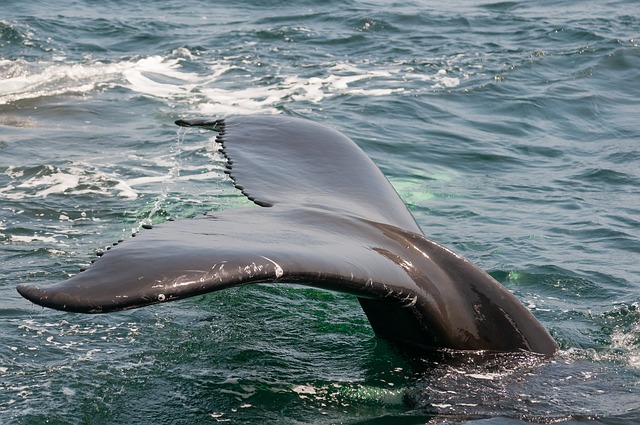 2 The smaller and shorter-lived the animal, the easier and cheaper it is to study it in the lab. The problem with this approach is that the more cells an animal has and the longer one lives, thereby surviving more cell divisions, the higher the chance of an animal should be to develop cancer, right? Only that it’s wrong! Known as the Peto’s paradox, larger animals actually have a decreased rate of cancer throughout their lifespan. One such interesting animal is the bowhead whale which is the longest-lived mammal surviving up to 2 centuries. Although hunted by humans for food – apart from rivaling killer whales – cancer is almost never found in these giant sea lords – who are just as accustomed to prolonged starvation and intermittent oxygen restriction (during diving for feeding) as naked mole rats.
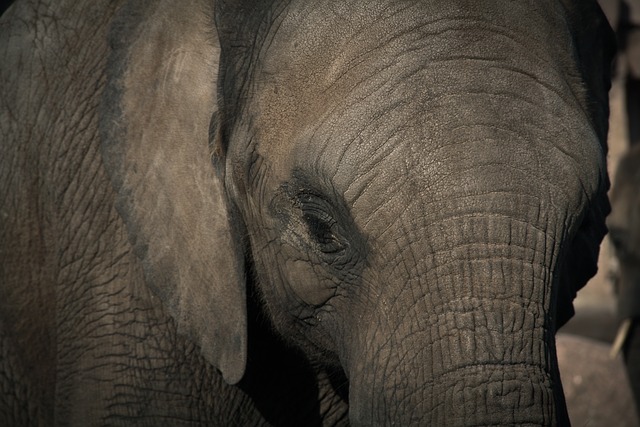
3 Another animal of considerable size with very few cases of cancer is the elephant. Now bigger animals have cells with bigger cell diameters as well. But when it comes to weighing several tonnes, the elephant – living around 70 years in the wild – must be an evolutionary experiment as well since cancers are so rare. One recent explanation could be the sheer number of copies of the p53 gene compared to healthy humans who have only 2 or cancer-prone Li-Fraumeni syndrome who have only 1 copy.
4 One of the mechanisms larger animals ‘learned’ to keep cancer at bay was to turn off telomerase in their somatic cells. Certainly, telomerase is an enzyme present in most human cancer cells that allows them to escape normal limits on growth and become immortal. But although telomerase suppression is present in many longer-lived species, I doubt it does them any good as it stops regeneration in its tracks and it increases genomic instability. In other words, somatic telomerase repression could be a side effect and not necessarily a desired effect. And the way to check for that is to study species that don’t bother with it – what are their usual cancer rates? You’d expect that an animal with indeterminate growth that avoid somatic telomerase suppression to have at least an average if not higher cancer rate, right? Well the red sea urchin certainly does not. Although living close to a century, its cancer rate is close to zero.
5 You may think that the red sea urchin – and many of its sea urchin relatives – are rarely studied, so that’s why its cancer rate is so low. But take lobsters – these are commercially important species that cater to most people’s plates. The average lobster leads a benthic lifestyle as well, living at the bottom of the water and being exposed to many carcinogens. And the average lobster goes on growing for the rest of its life. And yet its cancer rate is extremely low.
6 Decapod crustaceans in general are useful biological models in oncology research because they display indeterminate growth and rarely get cancer. Apart from lobsters, these include crabs, shrimp and crayfish.
7 One small rodent that displays abundant telomerase in its tissues is the gray squirrel and yet when it comes to placing its cells in a culture dish, their spontaneous proliferation is extremely slow. Go figure.
8 The axolotl is a frequently used animal in regenerative medicine studies, but rarely used in oncology research even if its cancer rate is low.
9 A group of species in which the cancer rate is surprisingly low is formed of long-lived seabirds.
10 Another rodent with cancer-proofing strategies is the blind mole rat. Living underground just like the naked mole rat, this rodent has a double set of interferon genes which may kill cancer cells in the first place.
Classical cancer studies were extremely helpful in developing chemoterapy, novel cancer surgery techniques, radiotherapy and hormone blockers, but what’s the next step? Can we do better than this? Can we adopt genetic strategies from animal species that learned how to prevent cancer in the first place?
References
Most references were taken from the ‘Cancer’ chapter in ‘The aging gap between species‘.
Dang, CV. “A metabolic perspective of Peto’s paradox and cancer.” Philos Trans R Soc Lond B Biol Sci 370, no. 1673 (July 2015). doi:10.1098/rstb.2014.0223.
Gomes, N. M., J. W. Shay, and W. E. Wright. “Telomere Biology in Metazoa.” FEBS Lett 584, no. 17 (September 2010): 3741-3751. doi:10.1016/j.febslet.2010.07.031.
Gorbunova, V., A. Seluanov, Z. Zhang, VN Gladyshev, and J. Vijg. “Comparative genetics of longevity and cancer: insights from long-lived rodents.” Nat Rev Genet 15, no. 8 (August 2014): 531-40. doi:10.1038/nrg3728.
Maciak, S., and P. Michalak. “Cell size and cancer: a new solution to Peto’s paradox?” Evolutionary applications 8, no. 1 (January 2015): 2-8. doi:10.1111/eva.12228.
Nagy, J. D., E. M. Victor, and J. H. Cropper. “Why don’t all whales have cancer? A novel hypothesis resolving Peto’s paradox.” Integrative and Comparative Biology 47, no. 2 (August 2007): 317-28. doi:10.1093/icb/icm062.
Prokopov, A. F. “Theoretical paper: exploring overlooked natural mitochondria-rejuvenative intervention: the puzzle of bowhead whales and naked mole rats.” Rejuvenation Research 10, no. 4 (December 2007): 543-60. doi:10.1089/rej.2007.0546.
Roy, S., and S. Gatien. “Regeneration in Axolotls: a Model to Aim For!” Exp Gerontol 43, no. 11 (November 2008): 968-973. doi:10.1016/j.exger.2008.09.003.
Abegglen LM, Caulin AF, Chan A, et al. Potential Mechanisms for Cancer Resistance in Elephants and Comparative Cellular Response to DNA Damage in Humans. JAMA. 2015;314(17):1850-1860. doi:10.1001/jama.2015.13134.
Anca Ioviţă is the author of Eat Less Live Longer: Your Practical Guide to Calorie Restriction with Optimal Nutrition ,The Aging Gap Between Species and What Is Your Legacy? 101Ways on Getting Started to Create and Build One available on Amazon and several other places. If you enjoyed this article, don’t forget to sign up to receive updates on longevity news and novel book projects!
Don’t miss out on the Pinterest board on calorie restriction with optimal nutrition where she pins new recipes every day.
https://www.pinterest.com/longevityletter/eat-less-live-longer/
Or the Comparative Gerontology Facebook Group where you can join the discussions on how species age at different speeds and what could be the mechanisms underlining these differences!
https://www.facebook.com/groups/683953735071847/



Hello Anca,
good article!
Here’s some updates I read about:
>>The naked mole rat is a rodent species where no individual was ever found of developing tumors.
Well, you have no fault, first cases of cancer in them were published just 1 month after your article 🙂 https://journals.sagepub.com/doi/full/10.1177/0300985816630796
However, I’ve read somewhere of a study that had examined > 2000 rats and no cancer was found, so your conclusions are still absolutely standing.
And, in the process of finding that article, just noticed some scientists have indeed taken the hyaluronan cue seriously: https://www.nature.com/articles/s41388-019-0719-4
With respect to larger animals and their remarkable cancer resistance: not to downsize the mechanisms you have described, here is another one I heard about (though not so old): hypertumour https://bmcbiol.biomedcentral.com/articles/10.1186/s12915-017-0401-7 , but my favorite reference is this 🙂 https://www.youtube.com/watch?v=1AElONvi9WQ (a very fun intro to cancer for beginners)
>> One recent explanation could be the sheer number of copies of the p53 gene
I’m optimistic: https://en.wikipedia.org/wiki/Peto%27s_paradox#Medical_research , https://scholar.google.ca/scholar?as_ylo=2016&q=p53+cancer+&hl=en&as_sdt=0,5&as_vis=1
Cheers!
Hello Anca,
good article!
Here’s some updates I read about:
>>The naked mole rat is a rodent species where no individual was ever found of developing tumors.
Well, you have no fault, first cases of cancer in them were published just 1 month after your article 🙂 (https://journals.sagepub.com/doi/full/10.1177/0300985816630796)
However, I’ve read somewhere of a study that had examined > 2000 rats and no cancer was found, so your conclusions are still absolutely standing.
And, in the process of finding that article, just noticed some scientists have indeed taken the hyaluronan cue seriously: (https://www.nature.com/articles/s41388-019-0719-4)
With respect to larger animals and their remarkable cancer resistance: not to downsize the mechanisms you have described, here is another one I heard about (though not so old): hypertumour (https://bmcbiol.biomedcentral.com/articles/10.1186/s12915-017-0401-7) , but my favorite reference is this 🙂 (https://www.youtube.com/watch?v=1AElONvi9WQ) (a very fun intro to cancer for beginners)
>> One recent explanation could be the sheer number of copies of the p53 gene
I’m optimistic: (https://en.wikipedia.org/wiki/Peto%27s_paradox#Medical_research) , (https://scholar.google.ca/scholar?as_ylo=2016&q=p53+cancer+&hl=en&as_sdt=0,5&as_vis=1)
Cheers!
<>
M. Levin thinks that organisms dialing up regeneration capabilities in organisms should enhance anti-canter powers.
https://www.youtube.com/watch?v=4sFpJF0dp8Y
Highly recommended