You can never put things in perspective until you measure them. And you need hard, cold numbers for that. Calorie restriction with optimal nutrition is the only robust method in gerontology that reliably prolonged lifespans in many species with an average of 30%. I thought 30% is huge. It’s not. Because after a serendipitous conversation with Thomas Hahn, I realized that the difference in lifespan between worker bees and their queens is around 400% (with an average worker bee lifespan of 6 months and an usual queen lifespan of 2 years, although extremes can differ as mentioned here). Since working on ‘The aging gap between species’, I already knew that diet is the answer to this huge lifespan gap between bees. So I was left with two hypotheses:
-either the queen’s lifespan is extended by what she eats or doesn’t eat
-either the worker bee’s lifespan is shortened by what she eats or doesn’t eat
Curiosity won and I dived straight into literature to find out what bee experts had to say about that.
Just like humans, bees are social animals. And just like humans, bees form complex societies. But unlike humans, they are eusocial. They are born into castes mediated by diet and their number of genome copies per cell. Male drones have one set of genome copies. Queens and female worker bees have two sets of genome copies. The latter are differentiated by what they eat and some would say, by what they don’t eat.
The diploid queen produces haploid eggs. Hence the queen will be able to transmit at most 50% of her genes with every single egg she produces. The haploid drone on the other hand will transmit 100% of its genes through each sperm cell that he produces. Since the queen mates with 10-20 drones during her nuptial flight, a colony of bees will be a collection of subfamilies made of one mother and one father each. Remember that the drone has no father, hence the drone is a flying gamete that transforms the genes from a queen’s egg into the same genes as a sperm cell. Coming back to subfamilies, worker bees with the same mother and the same father have in common 75% of their genes and these worker bees are called super-sisters. You can see now that it is more advantageous for them to protect the hive and support the queen to give rise to more super-sisters than it is to produce eggs themselves.
For the sake of simplicity, I will only focus on female bees in this blog post. The lifespan of the drone ends during mating anyway and at worst, drones are kicked out of the beehive when resources are low like in winter.
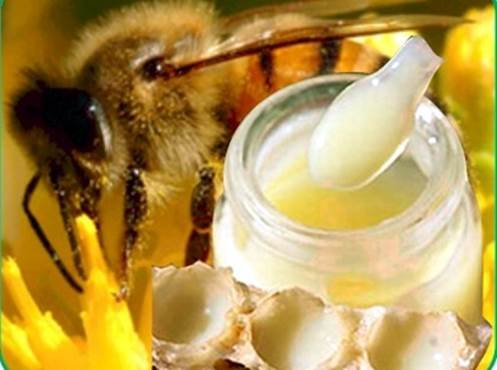
All bees – male and female – eat royal jelly during their first 3 days of life. Only the bees destined to become queens will subsequently be fed 100% royal jelly. A beehive can only have one queen and a fight will set out between competing bees. But the beehive is not an authoritarian monarchy. On the contrary, it is quite decentralized and the queen can be killed by the worker bees if she shows any signs of reduced fertility or disease.
Coming back to diet, it is either that prolonged consumption of royal jelly increases the lifespan of the queen or the lack of further royal jelly or consumption of pollen by the worker bees inhibit their reproductive systems and hence their lifespan.
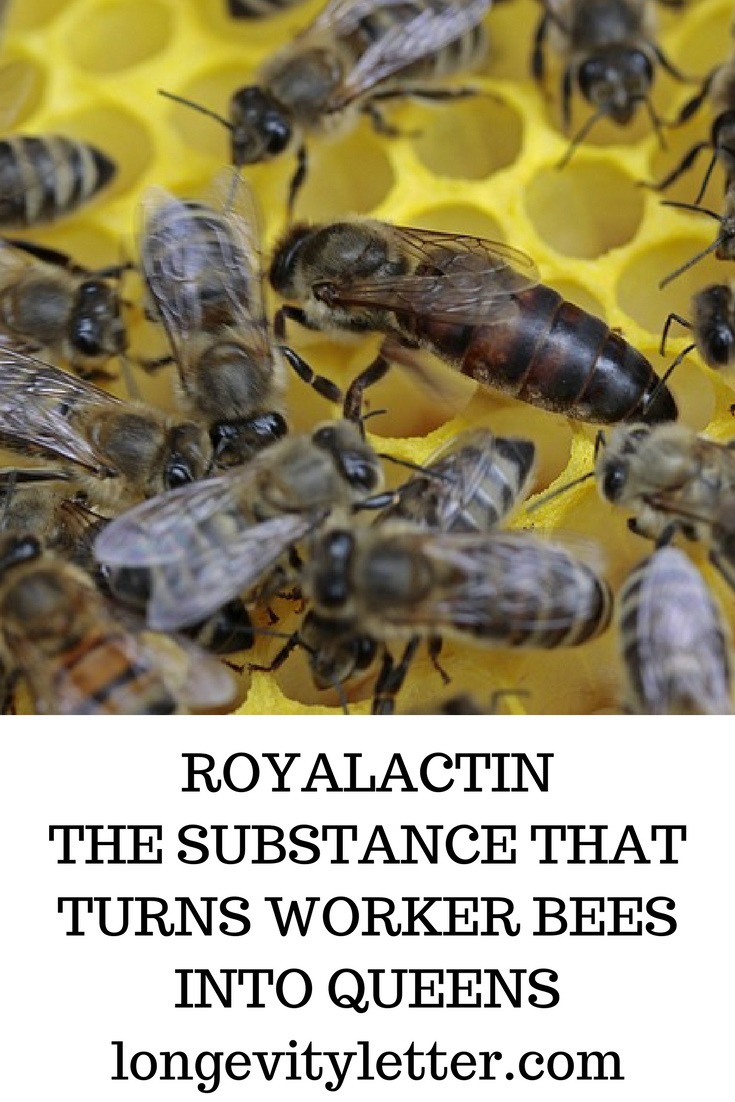
All sorts of hyped claims have been made about royal jelly and this is still the luxury product of beekeepers. But one team in Japan published a paper in Nature stating that there is only one protein responsible for the phenotype switch from worker to queen. It all started with noticing that old royal jelly did not induce the desired queen phenotype when administered. The longer the storage of royal jelly, the more attenuated the queen phenotype in the honeybee larvae in which it was tested. So whatever it was in royal jelly responsible for queen differentiation was being progressively degraded in time. This royal jelly was stored at 40 degrees Celsius during 7,14,21 and 30 days. So a frantic search began in identifying several possible substances that could be degraded with prolonged storage until no quantity could be identified at the end of 30 days. Vitamins, carbohydrates and fatty acids didn’t cut the test. So what was left were the proteins. Electrophoresis and chromatography are common methods for identifying the proteins in a mixture according to their weight. 3 proteins were shown to be degraded with age. One of them was degraded too fast. Another one was degraded too slowly. The third of them was completely degraded by the end of 30 days at 40 degrees Celsius. Now it was time to test this unique protein – previously identified as royalactin – on young honeybee larvae and see whether administering it led them to become queens in their morphology. And sure it did! Similar results were obtained with royalactin produced by recombinant technology in Escherichia coli bacteria.
According to the original paper, royalactin induces the queen phenotype through an epidermal growth factor (EGF) receptor existing in the fat body of honeybees. And the same protein increased the levels of juvenile hormone in honeybee larvae that became queens.
The next question that kept me up awake at night was whether royalactin on its own could increase lifespan in other species too. And I didn’t have to reinvent the wheel because the protein was already studied in fruit flies, worms and mice.
During the same research that produced the Japanese team paper, royalactin was tested in fruit flies. When administered in food, royalactin increased the lifespan of female fruit flies only. Feeding fruit fly larvae with royal jelly only caused their premature death. But when mixing it with glucose and yeast, the trick seemed to work. Adding royalactin to their diet also increased their size and their fertility. The increase in size in fruit flies that ate royalactin took place by increasing their cell size and not their cell number. I mention this detail because an increased cell size is often encountered in long-lived species e.g. negligibly senescent Arctica islandica clams increase the size of their cells with age.
Still in Japan, the lifespan of Caenorhabditis elegans worms was prolonged both by administering royal jelly and by administering royalactin only. Another team in Belgium showed that royalactin acted on the same receptor as in bees: EGF.
And when it comes to mice, results are mixed. I found two research papers where royalactin was added in the food of lab mice – this one and this one. In both cases, royalactin improved healthspan and not total lifespan.
What about humans?
To my knowledge, there was no royalactin study in humans (please prove me wrong in comments!) and there are very few studies on royal jelly in humans (healthy subjects and atherosclerosis patients). The only reliable feature I found was a drop in cholesterol levels. Another study mentioned an improvement in glucose levels, but that was in healthy subjects. These studies were short-term and contained low numbers of human volunteers.
The downside is that to separate the effects of royalactin from those of royal jelly supplements which are usually freeze-dried, you’d need fresh royal jelly. And that one is more expensive than the regular pills because the seller needs refrigeration too. A local source I found is this one. While I casually use royal jelly to supplement my nutrition with few calories, I don’t expect any longevity benefits from it. And there is a downside too.
Humans have an EGF receptor similar to the one on which royalactin acted on the species mentioned above. The problem is that the same EGF pathway is activated in some epithelial cancers. And there are even anti-EGF receptor monoclonal antibodies that could be used as cancer therapy. Humans live much longer than queen bees and this effect could kick in much faster. To sum it up, this link between EGF and cancer combined with the lack of proper human studies are the reasons for which I discourage royalactin supplementation on its own.
References:
http://genomics.senescence.info/species/entry.php?species=Apis_mellifera
Anca Ioviţă is the author of Eat Less Live Longer: Your Practical Guide to Calorie Restriction with Optimal Nutrition ,The Aging Gap Between Species and What Is Your Legacy? 101Ways on Getting Started to Create and Build One available on Amazon and several other places. If you enjoyed this article, don’t forget to sign up to receive updates on longevity news and novel book projects!
Don’t miss out on the Pinterest board on calorie restriction with optimal nutrition where she pins new recipes every day.
https://www.pinterest.com/longevityletter/eat-less-live-longer/
Or the Comparative Gerontology Facebook Group where you can join the discussions on how species age at different speeds and what could be the mechanisms underlining these differences!
https://www.facebook.com/groups/683953735071847/