 Some of the most amazing things happen in nature just before our eyes if we take a moment to notice them.
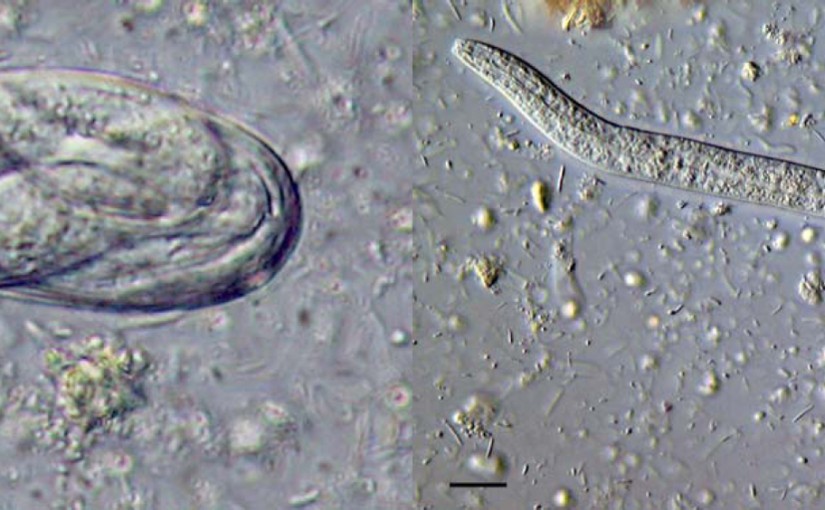
Rats are disgusting creatures we avoid – yet inside their intestines a parasite worm called Strongyloides ratti can be found. This worm is able to live both as a parasite and as a free-living creature during its life cycle. It can reproduce itself:
-asexually through parthenogenesis while being a parasite – only female worms are created this way
-sexually during its independent phase outside the rat – when female and male worms are created

Here is the amazing thing about this shy worm: female parasitic worms produce female eggs only – some of these go on reproducing parthenogenetically inside the rat’s intestine while others pass out of the host through its feces infecting other rats and reproducing themselves sexually.
Although these female worms start out with the same set of genes, the maximum lifespan in the first case is 403 days, while free-living adults live 5 days at most!
These individuals are morphologically different, yet genetically the same.
Why do individuals belonging to the same species display such an extreme aging plasticity? Which one is the “real” lifespan of this worm?
For the interested ones here is the journal paper this post is referring to.
Anca Ioviţă is the author of Eat Less Live Longer: Your Practical Guide to Calorie Restriction with Optimal Nutrition available on Amazon and several other places. If you enjoyed this article, don’t forget to sign up to receive updates on her second book regarding a comparative biography of aging from the simplest to the most complex organisms known.


