There are 2 ways to deal with the inevitable damage that takes place in an organism in time:
1. You can try to repair it.
2. You can try to limit it.
The first solution is usable, but expensive. Energetically expensive. Species mainly use it on the short-term. Some kind of repair is needed for actual maintenance and growth before the organism reproduces itself. But when it comes to preventing lineage senescence, this repair may never be 100% perfect. Just like in the case of an old car, some damage would be too energetically expensive to repair.
The second solution is energetically cheaper and it allows any daughter cell to start out life anew. Just like human babies are all born young. And while the first solution may or may not work depending on the available resources, the second one prevents lineage senescence.
The second solution is implemented both during the existence of a cell and during its division. Such cells are asymmetrical in some way, whether this asymmetry is in their shape or function. That’s what cell polarity is. Basically cell components redistribute themselves along an axis towards opposite poles. The cell’s poles include different membrane lipids, different membrane receptors, different quantities of organelles, different types of RNA and so on.
And when it comes to forwarding life to a new generation, polarized cells segregate their damaged parts and synthesize new parts for the offspring cell so that the daughter cell starts out anew. If you’re still scratching your head, this next example will make it all clear.
Cell polarity in the aging yeast
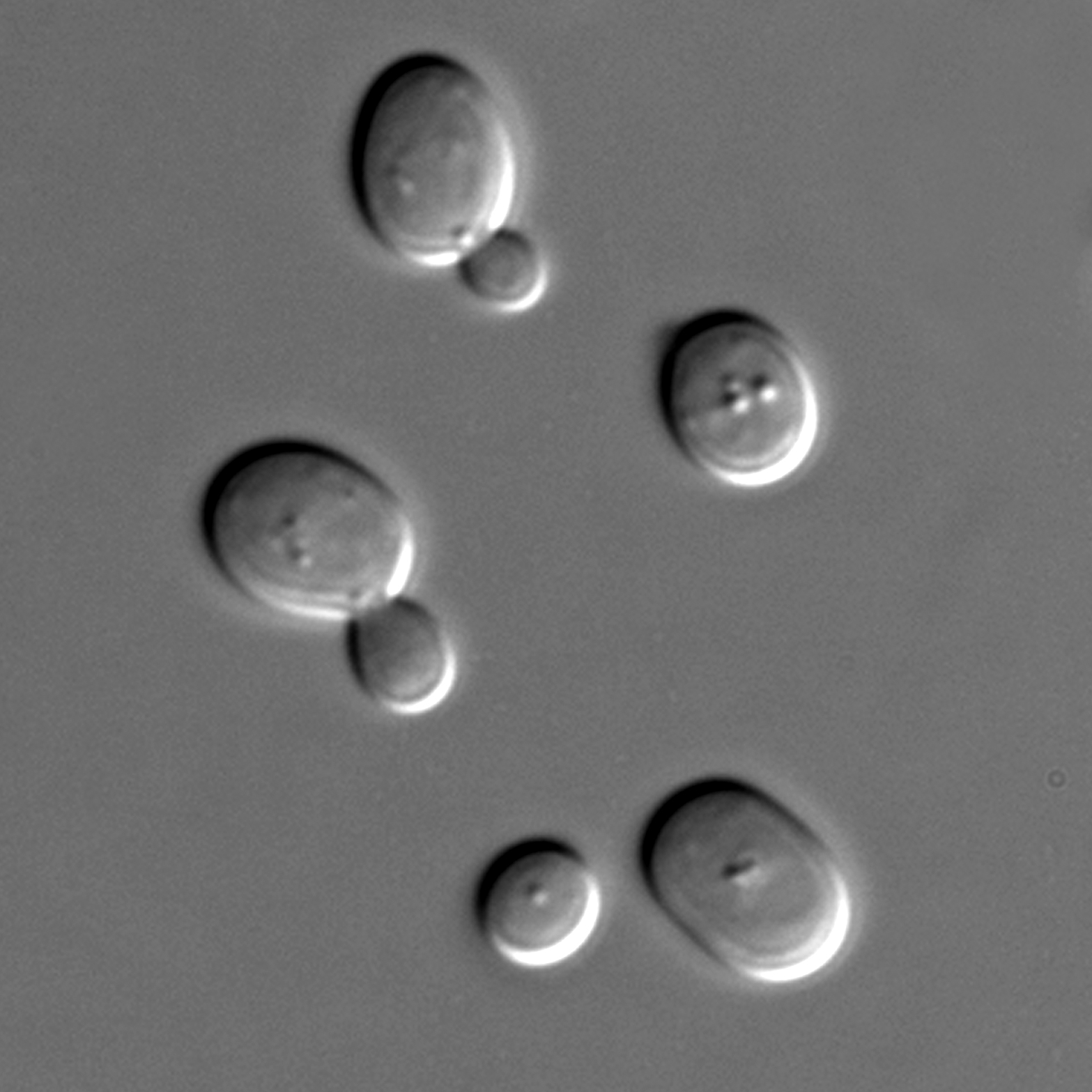
The baker’s yeast that you can buy from the supermarket (Saccharomyces cerevisiae) is an eukaryote unicellular organism with an average lifespan of 20-30 cell divisions, so it is a great model to study cell polarity and how it gets disrupted during aging.
Unlike us, yeast reproduces by budding.You start with one cell – the mother cell – which will form a bud and release a second cell called the daughter cell. They are linked through a neck bud, similar to the umbilical chord in mammals. This bud neck is responsible for the segregation of damaged material from new material. In yeast this bud neck is a ring whose main protein is septin. And as the mother cell keeps dividing, the ring gets looser and damaged material leaks into her daughter cell. And the daughter cell won’t be rejuvenated when born, while daughters from previous cell divisions would. Consequently, the daughter cell from an older mother will have a shorter lifespan as well. Resetting the clock is only possible if that bud ring stays firm. Or if damaged material stays away from the daughter cell and is transported back to the mother cell if leaked during cell division.
Remember the blog post about fibrosis? That happens in yeast too. As soon as the daughter cell is separated from the mother cell, the bud becomes a scar on the surface of the mother cell. And since bud scars are rarely used again to spring new buds to life, you can actually count the age of the mother cell by counting the number of bud scars on its surface.
If you’d like to see yeast budding in action, check out the video below:
Cell polarity in human aging and age-related diseases
Ever since you were one cell only, asymmetry was part of your life. Your first cell received different amounts of DNA from your parents and all your cellular non-coding material from your mother. You started out young. If you didn’t and too much aging damage would have existed in that first cell, you wouldn’t have survived. Next, by maintaining cell polarity with each new division, you were able to differentiate and control each step so that nowadays your cells express different gradients of proteins, RNA and other cellular components.
For a detailed step-by-step animation video on cell polarity during embryonic development check out this link:
http://wormclassroom.org/files/worm/polarity.swf
When it comes to stem cells, they can undergo both symmetric and asymmetric division. The ratio between them depends on external and internal signals. The niche cells surrounding a stem cell can control the way the latter divides. And since surrounding niche cells have such influence, it’s no wonder that stem cells act differently in young versus old cellular environments where they bath in different ratios of growth factors, hormones and several other stimulating/inhibiting substances.
Cell polarity influences many human diseases, age-related ones including.
- Cell polarity is inverted in autoimmune thyroid disease. Whether cell polarity inversion takes place in other autoimmune disorders is a question that I can’t answer right now. More research is needed.
- And cell polarity is disrupted – the cells tend to be symmetrical – in diseases like cancer, type 2 diabetes, atherosclerosis and Alzheimer’s disease. This loss of cell polarity is hastened by inflammation and oxidative stress. The image below shows symmetric HeLa cells, part of a cervical cancer line used in scientific research all over the world.

Cell polarity and anti-aging therapies
Now comes the practical part. Because theory and insight are only as good as the resulting applications.
Since segregation of damaged material is so important for starting out with a blank hard drive, cell polarity loss has a series of downstream effects in the maintenance of stem cell supply and in the differentiation of resulting daughter cells.
In order to test anti-aging therapies, cell polarity must be tested in dynamics – not as a single peak in time. Because aging is not cell polarity loss. Aging is cell polarity maintenance loss, especially when this loss takes place in the cells that replace us: stem cells. Taken to the extreme are the cancer cells which are symmetrical and show no contact inhibition. Or the senescent cells, too full of damaged material to keep on doing anything useful.
While cell polarity can be studied in dead cells, its maintenance must be checked in living cells – preferably while undergoing division – and whatever method of detecting the shape and function of those cells must not destroy them in the first place.

References:
Linking cell polarity, aging and rejuvenation http://www.ncbi.nlm.nih.gov/pubmed/20978937
Polarity and differential inheritance – universal attributes of life? http://www.ncbi.nlm.nih.gov/pubmed/19041746
Concise review: polarity in stem cells, disease, and aging http://www.ncbi.nlm.nih.gov/pubmed/20641041
In vitro and in vivo reversal of thyroid epithelial polarity: its relevance for autoimmune thyroid disease http://www.ncbi.nlm.nih.gov/pmc/articles/PMC1536273/
Anca Ioviţă is the author of Eat Less Live Longer: Your Practical Guide to Calorie Restriction with Optimal Nutrition ,The Aging Gap Between Species and What Is Your Legacy? 101Ways on Getting Started to Create and Build One available on Amazon and several other places. If you enjoyed this article, don’t forget to sign up to receive updates on longevity news and novel book projects!
Don’t miss out on the Pinterest board on calorie restriction with optimal nutrition where she pins new recipes every day.
https://www.pinterest.com/longevityletter/eat-less-live-longer/
Or the Comparative Gerontology Facebook Group where you can join the discussions on how species age at different speeds and what could be the mechanisms underlining these differences!
https://www.facebook.com/groups/683953735071847/


“The second solution is energetically cheaper ” — *IF* you have found a *working* solution (as distinguished from potential idea). Not to dismiss the time (and probability?) to find a working solution.
More practically, your article helped me understand the basis for one more realistic approach to local rejuvenation:
1. Stimulate the division rate of stem cells, in any particular tissue, in asymmetrical way, to produce more of the new differentiated cells in that tissue
and
2. Increase the rate of death of older differentiated cells in that tissue
(So that number of cells remains about constant over time)
What do you think?
Actually, 2 more:
3. Stimulate the asymmetrical division to produce more non-differentiated stem cells as well
4. Kill the older stem cells at a equal rate
What do you think?
I also thought of an exotic idea:
kind of the opposite of what the yeast mother-cell does: produce buds not for the purpose of producing new cells, but to actually discard damaged organelles and other “garbage” from the mother cell.
(I guess easier said than done 🙂 )
So this way the cell would get as many rejuvenation sessions as scars it can accumulate. Then also think of how to make it recycle scars too…
(dreaming is not harmful, lol)
I like your idea on producing buds to discard junk from the cell. It reminds me of a paper I read some time ago that linked health with the ability of an organism to either use energy to grow or to discard excess energy through reproduction. Reading your ideas is the first time I saw a positive spin on asymmetrical cell division in relation to aging since I presumed that symmetrical cell division is how a (unicellular) organism gets to reproduce and not age. But this is different in multicellular organisms and you’re right that this approach could be used therapeutically.