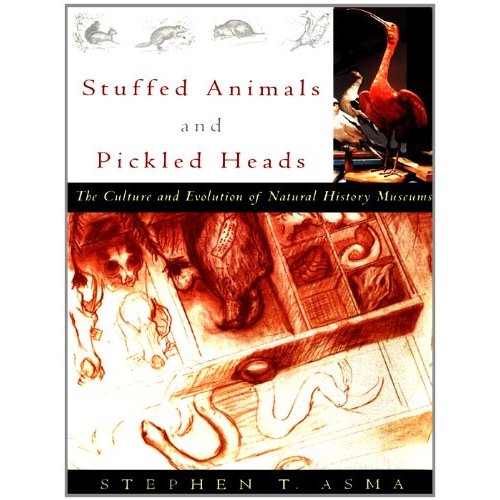
Natural history museums got too crazy about multimedia – why can’t the public appreciate the fine manual skills necessary to preserve an organism? A breathless zoo garden, a display of still life – frozen in time – all beautiful words for what are actually dead corpses. How come humans developed the interest for preserving and displaying them?
The author of this fabulous book has explored the evolution of this strange phenomenon and most importantly, the ideology behind it: every natural history museum tells a story through its displays – and most of the time, this story reflects the current political and cultural trends.
Flesh-eating beetles – the secret art of taxidermy
Taxidermy evolved because of trophy collectors. I was amazed about the health hazards these hobbyists and professionals exposed to in creating such art in a medium few of us can understand. The Freudian analysis of collectors and their “anal” tendencies was especially entertaining – I can’t call it scientific. Taxidermy also evolved because in the early days of naturalism, it was a mandatory skill to have.The curiosity cabinet is a typical European phenomenon – it is also the origin of future natural history museums.
Peter the Great’s mysterious jars: how to pickle a human head – Other great achievements of the scientific revolution
“Wet” specimen taxidermy is a whole different world. One the greatest collections of such specimens is housed inside the Royal College of Surgeons (London). This art is strongly related to embalming and anatomy – which are further explained and detailed. “Funerals, like museums and restaurants, have both a back stage and a front stage” – adding to the theatricality of embalming itself. Postmortem preservation needed to become more enduring for museums to display their specimens. Formaldehyde and later on wax (which allows more lifelike models) did just that.
Taxonomic intoxication
Part I : visualizing the invisible
Part II: in search of the engine room
Collecting specimens needs a way of classifying them in order to make ideas tangible – but since ideas are subjective by definition, so are the criteria of taxonomy.
Should organisms be classified according to their genetical traits or to the environment they inhabit? Which are more important: functional or structural differences? it is all relative.
Exhibiting evolution: diversity, order and the construction of nature
Evolution and the roulette wheel: a chance cosmos rattles some bones
Museums are not about including all content of a textbook (not even college students read them page to page), but omitting details and entertaining visitors during their short stay.
These two chapters analyze the challenges of the natural history museums and how they had to become more entertaining in the current century – and also how they conquered the Web. It is a challenge to reconcile both God and evolution so as to attract as many visitors as possible without annoying some of them.
Drama in the diorama: the confederation of art and science
The last chapter analyzes the museums as sources of education – mainly through visual aids. Memory is greatly facilitated by human emotions and museums are especially good at presenting science in an entertaining and affective manner. A “place of the Muses“, they were designed for inspiration and serendipity.
Some of the most valuable aspects of this book are the literary references on collecting and museology; they were richly included in the text – without breaking its flow – and as a result, there are lots of books to be read in the near future 🙂
The book can be found in a library near you or on Amazon.
Happy reading!


