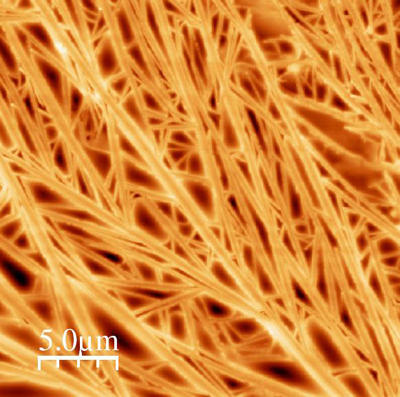

Whether aging is a real disease or not, many changes – both morphological and physiological – take place as we count more years on our birthday cake. After a previous discussion on the mitochondrial mutations – the powerhouses of our cells – and the degree of intracellular junk that accumulates each year, time has come to clarify the damage that occurs from junk that is deposited outside the cells – namely extracellular junk.
What is extracellular junk and how does it form?
Our DNA codes genes which are the blueprint of the myriad proteins it takes to build our cells and make them interact with the environment and with each other. The sequence of the amino acids forming a protein determines its final 3D structure which largely sets its future activities. These macromolecules exist for a limited period of time, after which they are degraded and largely recycled.
I said largely recycled because mishaps do happen. Proteins become misfolded and the cellular machinery is malfunctioning both in accomplishing its set activities as well as in recycling the damage. Several of our proteins become misfolded as we age, gathering themselves in sticky, insoluble aggregates, among which the most famous one is amyloid – take a look at it in the following slide:

What can we do about this sticky messiness?
Since these junk deposits lie outside the cells, the solution proposed by Dr. Aubrey de Grey as AmyloSENS proposes their attack with antibodies:
1. either actively through vaccination
2. or passively through injecting antibodies that are already manufactured
Currently vaccines can be delivered through:
1. injection
2. sublingual drops
3. transdermal patches
4. nasal sprays
How can we test this strategy in humans?
Just like the rest of the SENS strategies, accomplishing this task will first be accomplished in diseases which share a common mechanism to one or several types of aging damage – aging is not officially recognized as a disease, so such bypasses are necessary to progress the field.
Now if you live long enough, amyloid aggregates will be found among your cells – right in the interstitial space. Not only that: such accumulations can take place at higher rates, sometimes starting during mid-life, in a group of diseases called amyloidoses.
Since many of them become more prevalent as we age, it is debatable whether they represent an example of accelerated or normal, gradual aging – nevertheless, such diseases have dedicated -albeit minimal – research funds dedicated to them because they affect the lives of patients and their families and unlike aging, they are recognized as diseases in the first place!
The most encountered ones are:
1. Alzheimer’s disease
2. Cerebral amyloid angiopathy
3. Senile cardiac amyloidosis
Type II late-onset Diabetes may be a similar disease since amylin aggregates accumulate in the beta pancreatic cells responsible for insulin secretion.
Amyloidoses can be:
-systemic or primary
-inflammatory or secondary
The research is still in its infancy as regards the amyloidoses group. One disease in which I am hopeful as a geriatrician though is Alzheimer disease as amyloid immunotherapy trials are currently in Phase III! I know firsthand the limitations of current dementia medication and it breaks my heart that people put all their hopes into their doctor and there’s nothing more I can do for them, so I keep my fingers crossed this time.
So this is the plan for AmyloSENS, but that’s not all that needs to be done. As we age our proteins interact with surrounding sugars forming extracellular cross-links affecting their function and causing specific age-related diseases especially in diabetic patients where the sugar level in their blood is already high to begin with – more about it in the next part!
Bibliography:
“Ending aging” by Aubrey de Grey (link)
Anca Ioviţă is the author of Eat Less Live Longer: Your Practical Guide to Calorie Restriction with Optimal Nutrition available on Amazon and several other places. If you enjoyed this article, don’t forget to sign up to receive updates on her second book regarding a comparative biography of aging from the simplest to the most complex organisms known.


5 comments