Rome wasn’t built in a day and neither is longevity attained overnight.
A few years ago I read about the compound effect: it’s this idea that baby steps done regularly lead to extraordinary results on the long term. Exponential growth is very hard for humans to wrap their minds around. Linear growth is so much easier to understand. On the short term, doing or not doing things on a daily basis may not lead to impressive growth but effects do start showing up later with more impressive results. The compound effect is often mentioned in the finance world. There is this idea that when you are young, time is on your side and because of the compound effect, it is much more efficient to save/invest smaller amounts of money early on then to catch on with higher sums later on in your life.
But there is so much more to the compound effect which influences not only your finances but the total amount of time you have on this planet. Here are some examples:
1. Calorie restriction with optimal nutrition may extend human lifespan just like it did in other species or it may not. What short-term human volunteer studies show though is that CRON extends healthspan by decreasing blood pressure and blood glucose levels. There is much research these days on CRON mimetics – people just love instant gratification and who knows, maybe adding CRON mimetics to a CRON diet may lead to better results. But there is a slower way to achieve the same results for free no matter your health insurance: eat until you are almost full. Do that repeatedly day after day. Choose foods with a higher count of nutrients per calorie. Do that repeatedly. Vary your diet as much as possible. These things are not impressive and no one will praise you for doing them but in time you will maintain your weight. You may age but your blood pressure will remain under optimal values. If you’ll develop age-related type II diabetes, you will have it later in your life. Practicing CRON is not avoiding aging, but it can slow it down and that means keeping your body in better shape and enjoying more days on this planet.
2. There is no need for you to become a world champion in a certain sport. As for reaching a longer life, that may even be counterproductive. Professional athletes are under a lot of physical and mental pressure and the few that make it to the top may find themselves with too much money they don’t know how to invest so they spend it foolishly unaware that youth is a perishable good in humans. We are not hydras after all. Even worse, all that attention from strangers and the associated stress may lead to unhealthy lifestyles. No one will give you a trophy for exercising short amounts of time a couple of times per week. You could garden or clean the house or even regularly practice some sport and you won’t be in the news. But do that regularly and it will be worth it. You won’t achieve the longevity of a Bristlecone pine, but you will have a lower risk of age-related sarcopenia and osteoporosis. You will also maintain your weight and have more energy for the days left on this planet.
3. As an introvert, I know how much fun being home alone can be. But I also saw the effects of social isolation in elderly patients. Even if women are more likely to experience widowhood since they live longer on average, I was surprised to notice men fared worse in terms of social ties. The idea is that relationships don’t just happen. It takes time and attention to let them bloom. This is how a stranger becomes an acquaintance who becomes a friend. This is how a stranger becomes an acquaintance who becomes a date who becomes a partner and maybe even someone to build a family with. Compared to being a social butterfly, this sounds boring but these are the kinds of people who will be there for you. It’s much better to have fewer but more reliable friends. Being in a long-term relationship is not impressive, but it’s better on the long term. Besides, there is a higher risk of STDs with each new partner. Some STDs can be transmitted accidentally and/or non-sexually as well, but why make more accidents happen? The grass is rarely greener on the other side.
Speaking of relationships, a few weeks ago I watched an interesting episode of my favorite video show called Begin Japanology. I resonate a lot with this culture and from what I visited until now, Japan is the country I like most. This episode was about Shinese which are long-lived Japanese businesses. There is no other country in the world where companies last so long and it seems like the owners do things differently than in other parts of the world. First of all, profits are important but not more important than continuity so these companies grow slowly but steadily. This reminded me of negligibly senescent species where slow growth is also a rule, even in those species with indeterminate growth. Secondly, roots are more important than branches. Remember how perennial plants are longer lived than annuals? It’s the same principle. These companies focus on the local community instead of overextending themselves to other cities where they’d have to start all over again. They also build customer loyalty this way. And since profits are less important than continuity and the local community is key for making sales, people keep their jobs in times of natural disasters which also builds up employee loyalty. What goes around comes around.
4. Here is another way the compound effect acts to make it more likely to live longer: by challenging your mind every single day. There are two skills you will master in time: critical thinking and creativity. They are both necessary for longevity. Here is why.
In order to develop critical thinking, you must get out of your comfort zone. This will expand your mind and broaden your experience. The advantage of being able to think critically is that you will recognize fraud faster. You will avoid religious cults and the illusions sold by alternative medicine. You will avoid get-rich-quick schemes which may have an impact on your family life.
As far as creativity goes, this will help you in two ways. First, you will be able to make do with the resources that you have and this could ease your life in numerous ways. For example, it could help you achieve your goals with less money or less time or it could make you more grateful for what you already have. Second, creating things is good for your mental health and this could make you more resilient under times of stress. Creating things with your hands could also give you a break from the online world. I am so grateful for having access to the Internet. I am one of the lucky 2 billion people on this planet who can say that. But I get more and better ideas when I create things offline with my two hands. I also read in a more focused manner because my ebook reader has no Internet access.
5. Developing your critical thinking and creativity can provide a nice return on investment on the energy you’ll spend for these, but so does knowledge itself. Every little thing you find out from an article, a blog, an image, a podcast or a video tutorial could pay dividends later on. You just don’t know which ones will do so it’s best to spread your net wide and learn from as many fields as possible. Fields are artificial barriers people place to make information easier to organize. Focusing on a narrow niche may be good for making money, especially if you equal a career with a full-time job, but having a wider variety of experiences and knowledge will make you connect unexpected dots, it will make you more creative and I think it would also allow for more interesting conversations which may help with number 3 (see above). More knowledge may also allow you to lead a safer life, although if you don’t couple what you find out with critical thinking you’ll become paranoid about everything. For example, reducing the number of night shifts you work may be better for your health than eating organic bananas which you peel anyway or avoiding common tools like mobile phones which weren’t proven to be toxic or dangerous, yet could help you in an emergency.
Education – both formal and informal – is never wasted. But knowledge without critical thinking can do more harm than good.
Being up to date with progresses in gerontology, regenerative medicine and science in general is great, but it’s not enough to read science tabloids. You need to read actual academic papers and you need to understand the limits of any experiment you read about. Just because a beneficial effect was shown in yeast culture or on mice, it doesn’t mean you will achieve the same results as a complex human being. This is why there are clinical trials and meta-analysis papers. I am saddened when I see young people interested in life extension who take metformin. It produced interesting results in mice and I can understand taking it off-label when you’re very old or suffering from cancer with no therapeutic solutions, but young, healthy people have time on their side to wait for human clinical trials during which the appropriate dose could be tested or at least being able to know whether the risks of adverse effects are well worth it. And there are nasty side effects from metformin – this is why it’s not the only medication diabetic patients use. With no clinical experience, you may not know about them or you may dismiss them or you may not even know what to monitor. I am in a sabbatical from clinical practice, but I still can’t help from weighing risks over benefits and the risk of acidosis from metformin is just not worth it in a young, healthy person with no extensive clinical data to back it up. Trying metformin, rapamycin and other medical drugs is very different from trying dietary supplements or just eating less. Experimenting is how medicine progresses, but testing things this way may not lead to replicable results as a formal clinical trial under medical supervision would. Testing things slowly and conservatively is not impressive and for terminally ill patients things must be sped up, but when you have time on your side, this is how you really extend your life or at least your healthspan.
There could be no field of medicine more riddled with scams than gerontology. Just walk into any supermarket store or pharmacy and you’ll find rows after rows of ‘anti-wrinkle’ creams. If things were so easy to solve, how come there are still people with wrinkles? You may think you’re immune from this if you are familiar with more advanced technologies with an impact on life extension, but hype is a side effect of any new technology. In itself, technology is neither good nor bad. It just has its limits. It’s a tool. More technology does not always lead to better results. Less technology doesn’t either. It depends.
Here is an example: if your cholesterol level is high, your mortality and morbidity is also high according to statistics. If you believe only what is natural is good, you’ll try to decrease cholesterol by diet. This could certainly work, but if you have additional risk factors like smoking or diabetes or a previous heart attack, diet is not enough. You need medication. Which one and in what dose will be decided by your physician. If you believe more technology is always better, you’ll be easily convinced of undergoing angioplasty surgery for any associated plaques no matter the obstruction level and before you’ll have any symptoms. You won’t even ask for a second opinion. This is what I see happening among life extensionists as well. People either live with the illusion that one diet is a panacea for all diseases, cancer included, or they believe untested technology is preferable to conventional medicine and clinical trials in patients with manageable diseases. This is why in the 21st century there are shady stem cell clinics, shady DNA testing kits for home, shady telomere extension dietary supplements. They are shady not because stem cells wouldn’t be useful in regenerative medicine (as many species with extreme regenerative capabilities make use of stem cells) or because DNA sequencing couldn’t make medicine more personalized and hence safer or because keeping telomeres intact wouldn’t have an impact on regenerative capabilities if not aging itself. These companies are shady because they are trying to sell early technologies directly to unsuspecting patients without even mentioning that these technologies are unproven to work on humans or they are only approved for certain diseases.
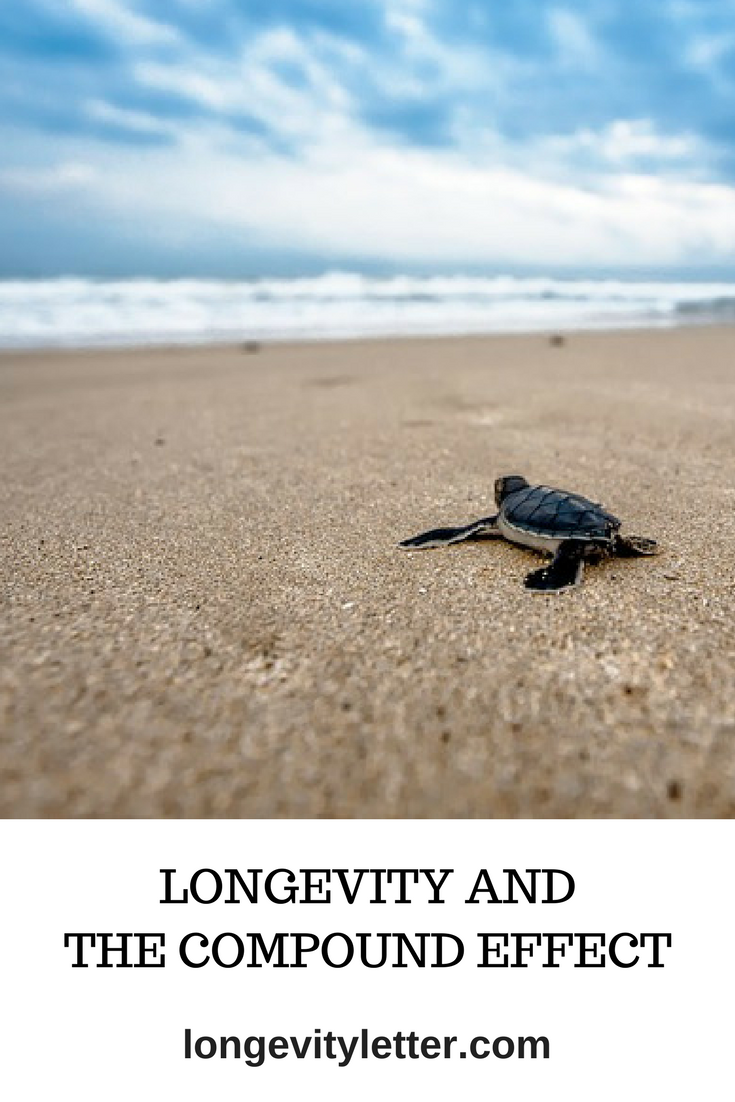
To sum it up, it’s the slow turtle and not the hasty rabbit who is a longevity symbol all over the world – maybe the turtle knows something about the compound effect. After all, turtles grow slowly and steadily all their lives and a couple of species are known to show signs of negligible senescence.
Anca Ioviţă is the author of Eat Less Live Longer: Your Practical Guide to Calorie Restriction with Optimal Nutrition ,The Aging Gap Between Species and What Is Your Legacy? 101Ways on Getting Started to Create and Build One available on Amazon and several other places. If you enjoyed this article, don’t forget to sign up to receive updates on longevity news and novel book projects!
Don’t miss out on the Pinterest board on calorie restriction with optimal nutrition where she pins new recipes every day.
https://www.pinterest.com/longevityletter/eat-less-live-longer/
Or the Comparative Gerontology Facebook Group where you can join the discussions on how species age at different speeds and what could be the mechanisms underlining these differences!
https://www.facebook.com/groups/683953735071847/



Everything in moderation…(except moderation). Or: “you are the sum of your habits”, and healthy habits make you live longer.
So, one question is what are healthy habits (and it’s pretty much answered already), and another question is how strong those habits are, or, equivalently, whether one can effectively build and maintain those good habits. “Easier said than done”, when it comes to long term adherence to anything that does not feel naturally pleasant or easy.
About socializing: I find that interesting, and puzzling. On the one hand, relationships help in the long term, on the other hand, there is such a thing as too much socializing, or days/times when you just don’t feel like seeing or talking to anyone– and where the optimum balance lies is individual.
So perhaps the best is when one has the freedom to meet and socialize when one feels like, as opposed to having someone around on a constant basis, like it or not?… But then, in times of depression or very low mood, one does not seek to meet others, and that’s exactly what may help to overcome depression?
Perhaps even socializing needs to be done in moderation then. Not sure if depression can be overcome simply by more socializing, but it occurs more frequently – at least in the elderly – in those people with no long-term, close relationships and the latter take time to form.